Best PE Civil Construction Exam Prep Courses
An honest 2026 comparison of PE Civil Construction prep courses — price, format, depth coverage, and pass guarantees — to help you pick the right fit.

For many busy candidates, PEwise is the recommended fit for PE Civil Construction preparation because it combines a logically sequenced curriculum with focused visual lessons, two full-length CBT-style practice exams, and weekly live support. Candidates who want a long instructor-led lecture program, printed binders, or access extending beyond 90 days may prefer EET, PPI, School of PE, Civil Engineering Academy, or ASCE.
Editorial disclosure: PEwise publishes this comparison and offers one of the courses reviewed. We applied the same candidate-fit criteria to every provider, used public product information checked on August, 2026, and identified limitations as well as strengths. Prices and promotions can change; verify the checkout page before purchasing.
Best PE Civil Construction Courses at a Glance
| Provider | Recommended fit and format | Publicly listed price | Access | Practice and main tradeoff |
|---|---|---|---|---|
| PEwise | Visual learners and busy engineers; self-paced focused visual lessons plus weekly live Q&A | $149 | 90 days | Two full-length 80-question CBT-style practice exams; shorter access than some alternatives |
| EET | Candidates wanting long-form instruction; on-demand or live webinar | 950–1,150 on-demand; 1,050–1,250 webinar | 16, 20, or 24 weeks | Quizzes, workshops, and simulated exams; more than 100 hours requires a substantial time commitment |
| School of PE | Candidates wanting a broad platform; OnDemand or live online with OnDemand | $499 monthly; 1,599–2,799 fixed-term OnDemand; live bundle displayed at $1,699 promotional / $2,199 regular | Varies by package | Question bank and course practice tools; value depends heavily on the selected tier |
| PPI | Candidates preferring manuals and a mature ecosystem; Learning Hub, OnDemand, or live online | OnDemand from $545 per month; fixed terms cost more; live course listed at $2,595 before promotions | Package-dependent; six-month Learning Hub available | Hundreds of practice questions, quizzes, and practice exams; higher tiers can be expensive and content-heavy |
| Civil Engineering Academy | Self-directed candidates wanting a simulator and extended support; self-paced | 797–1,397, depending on access | 3, 6, or 12 months | Practice exam, 100 theory questions, and CBT simulator |
| ASCE | Candidates valuing professional-society education; on-demand | Verify on current product page | 180 days | Handouts and practice problems; full CBT simulation is not publicly confirmed, and the overview uses obsolete breadth/depth wording |
If you want structured preparation without working through a marathon lecture archive, see how the PEwise PE Civil Construction course is organized.
Course Options by Candidate Type
- Recommended fit for focused visual preparation: PEwise. Its focused visual lessons are arranged into a structured preparation path, then reinforced through full-length CBT-style exams and live weekly help. The 90-day access period suits candidates ready to start, but not those buying a year in advance.
- Recommended fit for long-form instructor-led depth: EET. EET advertises 110 hours of professional instruction for its live webinar and more than 100 hours for its on-demand program, plus a printed binder, quizzes, workshops, instructor access, and simulated exams. That depth can help candidates who learn well from extended lectures and can protect the required study time. EET states that its upcoming live webinar will follow the April 2027 specification, so candidates should confirm that the selected recordings, binder, quizzes, and simulations match the specification effective for their exam date.
- Recommended fit for a large platform: School of PE. School of PE offers OnDemand and live-online pathways, a question bank, course materials, and structured tools. Its many packages give candidates choice, although comparing tiers requires careful attention to access, included features, and promotional pricing.
- Recommended fit for books and an established ecosystem: PPI. PPI combines digital learning tools with manuals, web books, quizzes, practice questions, and multiple course formats. It is a logical fit for candidates who want a traditional, resource-rich system and are comfortable with its cost and content volume.
- Recommended fit for extended self-paced access: Civil Engineering Academy. CEA publicly lists three-, six-, and 12-month options, video practice problems, a Construction practice exam, 100 bonus theory questions, live workshops, a planner, a reference index, and community support. Candidates should confirm the inventory included in their selected package.
- Recommended professional-society option: ASCE. ASCE offers six months of access and instructor-led professional education. However, its public overview still describes the old breadth-and-depth exam structure, so candidates should confirm that the specific Construction course and all materials have been updated to the current discipline-specific specification.
How We Evaluated PE Civil Construction Prep Courses
Generic “best PE course” lists can mislead Construction candidates. A provider may have a strong overall reputation while its current Construction course has different instructors, practice tools, access rules, or specification coverage. We used the following framework to compare each provider’s closest Construction-specific offering. The percentages show the relative importance assigned to each criterion; they are not published product scores because several providers do not disclose enough standardized information for defensible numerical scoring. Also, if you need more information about the PE civil construction exam, you can check PE Civil Construction Exam: Complete Guide to Topics Format & Scoring
| Criterion | Weight | What matters |
|---|---|---|
| Construction specification coverage | 20% | Explicit alignment with the current NCEES Construction specification and applicable design standards |
| Practice quality and CBT readiness | 20% | Full timed practice, realistic navigation, detailed solutions, and reference-location feedback |
| Instructional quality | 15% | Clear, accurate explanations and useful visual or worked application |
| Study efficiency | 15% | Logical sequencing, manageable lessons, progress visibility, and little filler |
| Support and feedback | 10% | Live help or a clear, timely instructor-support channel |
| Price and value | 10% | Total price compared with included teaching, practice, and support |
| Flexibility and access | 5% | On-demand availability, access length, and schedule fit |
| Policy transparency | 5% | Clear refund, repeat, or pass-guarantee conditions and support claims |
We did not award extra credit for an unexplained pass-rate percentage. Provider pass rates are not comparable unless the provider discloses the cohort, date range, response rate, first-time and repeat-candidate mix, course-completion threshold, and definition of a student. We also distinguish a scheduled live class from live Q&A, a question bank from a full practice exam, and a mobile-responsive website from a native app.
What the PE Civil Construction Exam Actually Requires
The current PE Civil: Construction exam is a computer-based, discipline-specific exam. NCEES states that the PE Civil exam contains 80 questions and has a nine-hour appointment that includes the nondisclosure agreement, tutorial, scheduled break, and exam time. It is administered year-round at Pearson VUE test centers. Candidates should use the current Construction specification and design-standards list posted by NCEES for their exam date.
That format changes what “good preparation” means. A useful Construction course must do more than explain equations. It should help candidates move among project planning, estimating, scheduling, soil mechanics, site development, materials, temporary structures, construction loads, safety, hydraulics, surveying, and other specification areas. It should also build speed in finding and applying provisions from the supplied electronic handbook and listed design standards.
The exam is not an open-library research exercise. Personal books and notes are not available inside the testing room. Preparation should therefore include reference navigation, mixed-topic problem recognition, timed decision-making, and practice with the calculator model permitted under the current NCEES policy that you plan to use. For a fuller scope breakdown, read the PE Civil Construction exam guide.
PEwise: Recommended Fit for Focused PE Civil Construction Preparation
PEwise is a strong fit for candidates who want structured Construction preparation delivered efficiently. The course organizes its coverage into 39 logically sequenced modules and 566+ focused video lesson topics. Each lesson isolates a concept, method, or decision so candidates can learn in manageable units without losing the depth of the full sequence.
Why the lesson format matters
Many engineers study around full-time work and family responsibilities. A two- or three-hour recording is difficult to revisit when one idea remains unclear. PEwise uses purpose-built visual instruction instead of relying on a tripod-and-whiteboard archive. Diagrams, motion, annotation, and focused explanation help candidates see how variables and processes relate, while the short lesson structure makes weak areas easier to locate and repeat.
Short does not mean superficial. The advantage comes from removing filler and repetition while retaining the chain of concepts and applications candidates need. This is why PEwise describes its approach as comprehensive in depth, focused in delivery, and efficient by design.
Practice in a realistic CBT-style environment
PEwise includes two full-length CBT-style practice exams. The interface supports timed testing, flagging questions for review, an electronic-reference workflow, detailed solutions, and reference sections. These features help candidates practice the workflow they must manage under time pressure: interpret the question, identify the governing resource, solve, decide whether to flag, and review efficiently.
The simulator is designed to build relevant computer-based testing habits; it is not described as the Pearson VUE software itself. For navigation strategy, see the PE Civil CBT navigation guide.
Weekly support without a fixed lecture schedule
Self-paced learning does not have to mean studying alone. PEwise members can bring difficult concepts and practice questions to the weekly PE Power Hour on Tuesdays at 6 p.m. PT. This combines on-demand progress during the week with a regular opportunity to ask for help.
Strengths
- 39 structured modules and 566+ focused visual lesson topics
- Designed visual explanations rather than long whiteboard recordings
- Two realistic CBT-style practice exams with detailed review tools
- Weekly live PE Power Hour support
- A cohesive path suited to full-time engineers and candidates with limited study time
Limitations
- The initial 90-day access period is best suited to candidates ready to begin studying soon. Candidates who need additional preparation time can extend their access for another 90 days at a discounted price of $90.
- Candidates who specifically want scheduled, multi-hour live lectures and printed binders may prefer EET or another traditional program.
Recommended fit: working professionals, visual learners, first-time candidates who need structure, retakers seeking a more focused system, and candidates preparing within an active 8-to-12-week window.
Not ideal for: candidates buying many months before they intend to study or those who want the accountability of a fixed lecture cohort.
Explore the PEwise PE Civil Construction course and preview how focused visual instruction and CBT-style practice work together.
EET: An Option for Long-Form Instructor-Led Depth
EET is a strong alternative for candidates who equate a review course with extensive instructor contact, long lectures, a printed binder, workshops, and simulated exams. Its Construction page lists on-demand and webinar formats with 16-, 20-, and 24-week subscriptions. EET advertises 110 hours of professional instruction for the live webinar and more than 100 hours of recorded content for the on-demand program. Its page contains different descriptions of the simulated-exam inventory, so candidates should verify the number included in the selected package. EET also states that the upcoming live webinar will follow the April 2027 specification; candidates should confirm that every included resource matches the specification effective for their exam date.
The major strength is also the central tradeoff. Candidates receive a large volume of instruction and practice, but they must have enough weekly time to use it. Someone working unpredictable hours may find that a 110-hour archive becomes a backlog rather than a benefit. EET is therefore a recommended fit when long-form teaching improves comprehension and the candidate can maintain a disciplined schedule.
Recommended fit: candidates who want extended lectures, a printed binder, live-webinar availability, workshops, and instructor access.
Not ideal for: candidates who want short visual lessons or who need to compress preparation into limited weekly hours.
School of PE: An Option for a Large Multi-Tool Platform
School of PE offers Construction-specific OnDemand and live-online pathways. Its public pages advertise immediate OnDemand access, structured course materials, a question bank, and a live bundle. This breadth makes it attractive to candidates who want multiple study tools within one platform.
The purchasing decision requires attention because prices, access periods, and inclusions vary by tier and promotion. Compare the complete Construction option you would actually buy—not a low-cost entry product—with other providers’ complete courses. School of PE also publishes a student pass-rate claim, but that figure should be treated as self-reported unless the complete methodology for the relevant Construction cohort is available.
Recommended fit: candidates who want both OnDemand and live-online choices and prefer a broad digital platform.
Not ideal for: buyers who want a simple, single-price decision or who will not use the platform’s additional tools.
PPI: An Option for a Mature Study Ecosystem and Manuals
PPI has one of the most established collections of PE study products. Its Construction offerings include Learning Hub access, OnDemand and live-online options, web books, quizzes, practice exams, and hundreds of practice questions. A six-month Construction Learning Hub option is publicly listed, while the monthly renewing OnDemand option starts at $545 and the scheduled live course is listed at $2,595 at the time of review.
PPI makes sense for candidates who prefer a traditional resource ecosystem and want manuals to remain central to their preparation. The tradeoff is that resource quantity can increase both cost and decision fatigue. Before purchasing, identify whether you need a full live course, an OnDemand bundle, or only targeted Learning Hub practice.
Recommended fit: book-oriented learners, candidates who want a mature question and reference ecosystem, and those who value multiple access tiers.
Not ideal for: candidates prioritizing a concise visual path or seeking the lowest total cost.
Civil Engineering Academy: An Option for Extended Self-Paced Support
Civil Engineering Academy presents self-paced Construction packages with three-, six-, and 12-month access options, video practice problems, a Construction practice exam, 100 theory questions, a CBT simulator, live workshops, a course planner, a reference index, downloadable slides, community access, and one-on-one support. Its page inconsistently lists 11 or 12 Construction lecture modules, so candidates should confirm the current inventory before enrolling.
That combination gives self-directed candidates a broad collection of tools without requiring a fixed live-class schedule. However, candidates should confirm the current final price, access term, refund rules, and whether every element shown on the sales page is included in the selected package.
Recommended fit: independent candidates who want a self-paced course, community, planning tools, and an exam simulator.
Not ideal for: candidates who want a tightly sequenced, high-density visual curriculum or fully transparent comparison data before checkout.
ASCE: A Professional-Society Option, with a Currency Check Required
ASCE’s PE exam-preparation program offers six months, or 180 days, of course access and emphasizes instruction from experienced professionals. This can appeal to candidates who value the context and credibility of a major civil-engineering society.
There is an important caution. ASCE’s public exam-preparation overview still describes the PE Civil exam as a breadth-and-depth examination, wording that does not reflect the discipline-specific specifications effective since April 2024. That does not prove the paid Construction lessons are outdated, but it means candidates should ask ASCE to confirm the specification date, design-standard editions, practice format, and lesson-update date before purchasing.
Recommended fit: candidates who prefer professional-society education and value six months of access.
Not ideal for: candidates who want a clearly demonstrated CBT simulation or who cannot confirm that the selected materials match the current specification.
Which Course Is Best for Your Situation?
Working professionals
PEwise is a recommended fit for many working engineers because focused lessons lower the friction of starting and stopping a study session. The ordered curriculum shows what comes next, while weekly Q&A provides human help without requiring attendance at long scheduled lectures.
Beginners or candidates outside their daily practice area
Choose a structured course with a clear learning sequence, not only a question bank. PEwise offers a guided visual path; EET offers extended instructor-led depth; PPI offers a large reference ecosystem. The right choice depends on whether you learn most effectively through focused visuals, long lectures, or manuals.
Retakers
Do not automatically repurchase the largest course. First classify the previous attempt: knowledge gaps, reference-navigation problems, weak time control, insufficient mixed practice, or avoidable execution errors. PEwise may suit retakers whose diagnostic shows a need for a focused relearning path plus realistic CBT-style practice. A targeted question bank may be enough if content knowledge is already strong.
Visual learners
PEwise may be a strong fit for candidates who understand processes better through designed diagrams, animation, and focused visual explanation. Candidates who prefer traditional lecture notes and binders may be more comfortable with EET or PPI.
Candidates who need live classes
Choose EET or a School of PE live package if a fixed class schedule is essential for accountability. PEwise includes live weekly Q&A, but its primary instruction is self-paced; live Q&A is not the same as a scheduled live lecture course.
Candidates with an exam in 8–12 weeks
PEwise’s 90-day access and focused structure align naturally with an active preparation window. Begin with a diagnostic, prioritize specification areas by weakness and exam relevance, and reserve enough time for both full practice exams and error-driven review.
Candidates planning far in advance
PPI’s six-month Learning Hub, ASCE’s 180-day access, or EET’s longer subscription choices may fit better. Do not pay for access months that will expire before you study consistently.
Candidates looking for mobile access or adaptive learning
Test the current product before buying. A responsive website is not necessarily a native mobile app, and an automated study plan is not necessarily adaptive learning. These capabilities were not consistently documented across all Construction offerings reviewed, so they should not drive a purchase without a live demonstration.
Is a PE Civil Construction Review Course Worth It?
A full review course is worth it when it replaces uncertainty with a reliable system. Candidates often lose time deciding what to study, collecting mismatched resources, watching explanations without solving, or practicing only familiar topics. A well-designed course supplies scope, sequence, instruction, practice, and feedback in one place.
A course may not be necessary for an experienced, disciplined candidate who can accurately diagnose gaps, navigate all assigned references, build a realistic schedule, find enough current problems, and review errors without outside support. In that situation, the official references, the NCEES practice exam, and targeted problem sets may be sufficient.
| Route | Best when | Main risk |
|---|---|---|
| Full course | You need instruction, structure, coverage, practice, and support | Paying for tools you do not use |
| Question bank only | Your concepts are strong and you need more mixed application | Practicing errors without repairing the underlying concept |
| Independent self-study | You can plan, source, and evaluate your own preparation | Scope gaps, outdated materials, and inefficient study time |
What Study Materials Do You Need Besides a Course?
Even a complete course should be used with the resources governing your exam date:
The current NCEES PE Civil Reference Handbook available through MyNCEES. Use the version assigned to your exam rather than relying on an old downloaded copy.
The current Construction design standards listed by NCEES. Learn which document controls each topic and how to search the supplied electronic versions.
The official NCEES PE Civil: Construction practice exam. It provides a valuable official sample, but one exam should not be your only source of practice.
A calculator model permitted under the current NCEES calculator policy. Practice with the same permitted model you intend to use on exam day.
An error log. Record the concept, source location, error type, correction, and re-solve date—not merely whether the answer was wrong.
Optional targeted problems. Add these only when diagnostics reveal a genuine gap. More material is not automatically better.
Personal notes, books, and downloaded standards are not brought into the CBT exam room. Build preparation around the electronic resources supplied for the examination.
How Long Should You Study with a Prep Course?
There is no responsible universal study-hour promise. Your required time depends on your baseline, distance from school, daily work exposure, reference familiarity, weekly availability, and exam date. Start with evidence instead of adopting someone else’s 300-hour target.
Use this process:
- Take a mixed, untimed diagnostic across the current specification.
- Classify each miss as a knowledge, setup, reference, calculation, unit, or time-management error.
- Assign more time to weak, high-importance areas and less to demonstrated strengths.
- Progress from learning and targeted problems to mixed timed sets.
- Complete full-length practice under realistic conditions.
- Adjust the schedule using error trends and re-solve performance.
PEwise is designed to reduce time lost to unnecessary repetition through focused lessons, clear sequencing, and integrated practice, but it does not establish a universal completion time. Readiness should be determined through accuracy, reference-navigation speed, mixed practice, and full-length simulation results. Use the PE exam study schedule to turn your diagnostic into a weekly plan.
Final Recommendation
PEwise is the recommended fit for many PE Civil Construction candidates, particularly working professionals who want structured instruction without a long lecture archive. Its 39 sequenced modules, 566+ focused visual lesson topics, two full-length CBT-style practice exams, and weekly PE Power Hour connect concept learning, exam application, and human support in one efficient path.Choose EET if long live or recorded lectures and a printed binder are central to how you learn. Choose PPI if you want a mature manual-based ecosystem and several access tiers. Consider School of PE for a broad multi-tool platform, CEA for a self-paced simulator-and-community package, or ASCE if professional-society instruction matters and the current specification alignment is confirmed.
Ready to turn focused learning into exam readiness? PEwise delivers comprehensive PE Civil preparation with the depth you need, compressed into clearly sequenced courses that eliminate filler, repetition, and wasted study time. For PE Construction candidates, that includes 39 logically sequenced modules, 566+ focused video lesson topics, two realistic CBT-style practice exams, and weekly live Q&A.
Start the PEwise PE Civil Construction course.
Frequently Asked Questions
What is the best PE Civil Construction exam prep course?
PEwise is the recommended fit for many busy candidates because it combines 39 sequenced modules, 566+ focused visual lesson topics, 40 quizzes containing 124 questions, two full-length CBT-style practice exams, and weekly live Q&A sessions. Candidates who prefer long instructor-led cohorts, printed binders, or a longer initial access period may find EET, PPI, or another provider more suitable.
Are PE Civil Construction prep courses worth it?
They are worth it when you need a structured curriculum, coverage outside your work experience, realistic practice, or instructor feedback. A disciplined candidate with strong fundamentals and reference-navigation skills may instead need only official resources and targeted problems. The value depends on which gaps the course removes.
Which course is best for working professionals?
PEwise is well suited to working professionals because its focused lessons can fit into shorter study sessions, its modules provide a clear sequence, and the core course is available on demand. Weekly live Q&A adds support without turning the entire program into a fixed lecture schedule.
Do PE Civil Construction prep courses include practice exams?
Many do, but the format varies. A question bank, timed quiz, partial simulation, and full-length CBT-style exam are not equivalent. Check the number of full exams, question count, timing controls, interface tools, solution detail, and reference feedback before comparing providers.
How long should I study for the PE Civil Construction exam?
Study time depends on your baseline, weekly availability, reference skills, and exam date. Begin with a mixed diagnostic, build a phased schedule around the errors you find, and progress toward timed mixed sets and full simulations. Avoid adopting a universal hour target without evidence from your own performance.
Are PE course provider pass rates comparable?
Usually not. A meaningful comparison requires the cohort dates, sample size, response rate, first-time and repeat-candidate mix, course-completion rules, and definition of a student. Treat percentages as self-reported marketing claims when the methodology is incomplete.
Do PE Construction courses offer money-back guarantees?
Some providers offer a refund, repeat course, or pass-related policy, but these are rarely unconditional. Read the current policy for completion thresholds, eligible exam dates, documentation, notification deadlines, and whether the benefit is a refund, extension, or free repeat.
Where can I find free PE Civil Construction practice exams?
Use only current resources that identify their specification basis and provide reviewable solutions. A free question set can help with diagnosis, but it should not be confused with a full-length practice exam. PEwise candidates should check the current Construction course and preview pages for any available free practice offer.
Keep Reading

Best PE Construction Study Materials: Courses, References and Practice
Overwhelmed by PE Construction study options? Discover which courses, books, references and practice exams deserve a place in your study plan. This guide helps you choose with confidence, avoid duplicate purchases and make the most of your study time and budget.
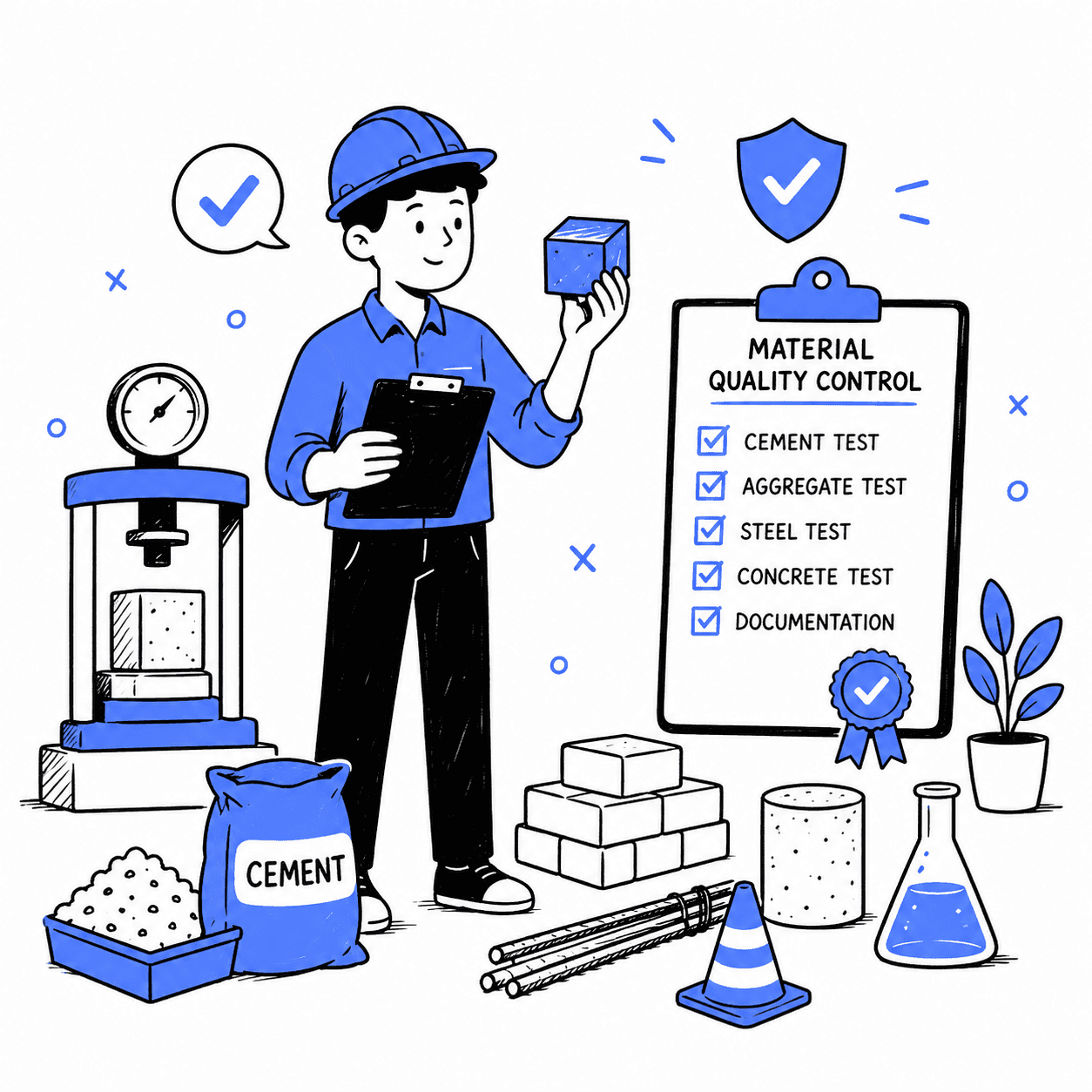
PE Exam Construction Material Quality Control: Tests, QA/QC, and Exam Decisions
Learn how to solve PE Civil Construction quality-control questions involving material tests, QA/QC, concrete, welds, bolts, maturity, and compaction.
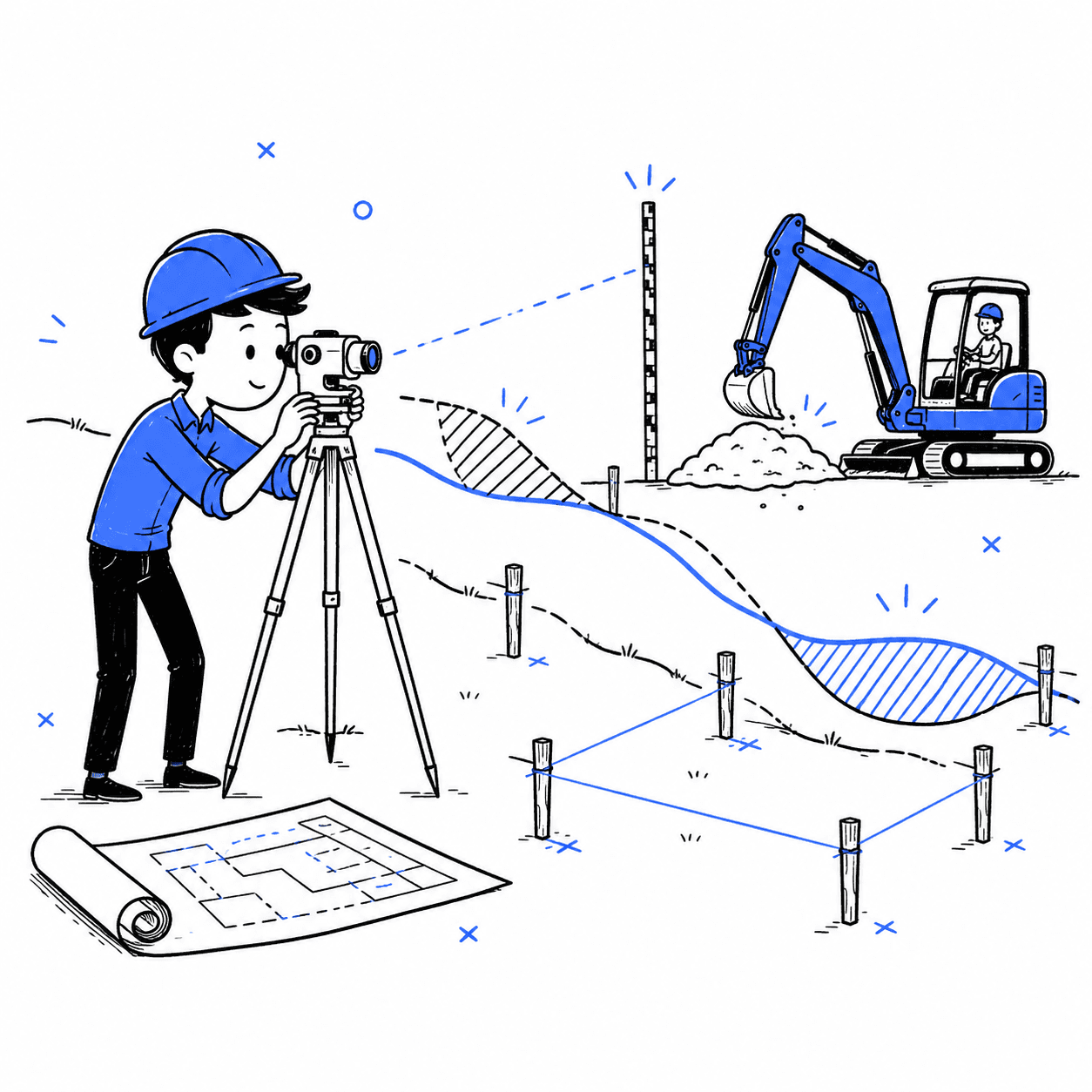
PE Exam Construction Earthwork & Site Layout: Concepts, Methods, and Exam Scope
Learn how to approach PE Construction earthwork and site-layout topics, including cut and fill, volume methods, material states, benchmarks, staking, and site control.