Best PE Construction Study Materials: Courses, References and Practice
Overwhelmed by PE Construction study options? Discover which courses, books, references and practice exams deserve a place in your study plan. This guide helps you choose with confidence, avoid duplicate purchases and make the most of your study time and budget.

Preparing for the PE Civil Construction exam can quickly become overwhelming. There are review manuals, online courses, problem books, official references and practice exams everywhere you look. The goal is not to collect all of them. It is to choose materials that each serve a clear purpose: one reliable resource to teach the subject, the official references you will use during the appointment, enough practice to build problem-solving skill, and full-length testing to help you manage time and fatigue.
For candidates who want a comprehensive and focused system, PEwise is a strong place to start. Its PE Civil Construction course brings visual lessons, a sequenced curriculum, quizzes, weekly live support and two full-length CBT-style practice exams together in one platform. Candidates who learn best through scheduled lectures, printed binders or a larger traditional study ecosystem may prefer another provider. Either way, it helps to compare materials based on what they actually help you do—not just how many videos, pages or questions they include.
What PE Construction study materials do you actually need?
You do not need every book mentioned in a forum or every course advertised online. You need a study system that covers the current Construction specification and gives you repeated opportunities to apply what you learn. For most candidates, that means:
| Resource | What it does | How to use it |
|---|---|---|
| Current exam specification | Defines the tested knowledge areas and applicable standards. | Use it as the scope checklist before choosing materials. |
| Main learning resource | Teaches concepts, terminology and solution methods. | Work through lessons in sequence and revisit weak areas. |
| NCEES Reference Handbook and listed standards | Provide the electronic references available during the exam. | Practice finding provisions while solving problems. |
| Topic practice | Turns review into applied skill. | Solve, review the reasoning and record recurring errors. |
| Official NCEES practice exam | Shows NCEES-authored question style and content. | Use it as a benchmark after learning the core material. |
| Full-length CBT simulation | Builds timing, navigation and endurance. | Take at least one in a realistic timed setting and analyze results. |
A course is optional in principle, but a structured course can make preparation easier by showing you what to study next. Self-study can work well if you already understand the fundamentals, can evaluate the specification yourself and will consistently solve and review problems. If you are returning to construction topics after several years, a teaching resource may save time compared with trying to learn everything from answer explanations alone.
PEwise publishes this guide and offers the course it recommends, so that relationship is worth stating clearly. The reason PEwise is included is that it combines instruction, practice and assessment in one focused Construction resource instead of asking candidates to assemble separate videos, quizzes and simulations themselves.
Start with the PE Civil Construction exam scope
Before buying a course or book, confirm the specification that applies to your exam date. NCEES identifies eleven Construction knowledge areas, including soil mechanics, site layout and development, material properties, estimating quantities and costs, project planning and scheduling, quality control, structural mechanics, hydraulics and hydrology, construction operations and methods, support of construction loads, and health and safety. The question ranges vary by area, so your materials should cover both familiar construction subjects and the supporting engineering topics that can be easy to overlook.
The PE Civil Construction exam guide explains the format, topic structure and references in more detail. It is a useful starting point if you want to understand the exam before choosing your materials. This guide has a narrower purpose: helping you decide what to use for learning and practice once you understand the scope.
NCEES describes the PE Civil exam as an 80-question computer-based exam with an appointment that includes a tutorial, eight hours of exam time and a scheduled break. NCEES supplies the electronic handbook and listed design standards during the exam. Personal reference books cannot replace those electronic files in the testing room, so your study materials should help you learn the content and become comfortable using the supplied references.
PEwise: a comprehensive option for focused Construction preparation
PEwise is a good fit for candidates who want one complete Construction resource without having to piece together several separate products. The course uses short visual lessons to explain one concept at a time, then connects that learning to quizzes and practice. This can be especially helpful if you are studying around a full-time job because you can complete a manageable session, return to a difficult topic later and keep your preparation moving.
The published Construction course includes 39 modules, more than 566 published topics, 40 module quizzes containing 124 questions, and two full-length 80-question practice exams. It also includes a CBT-style simulator with timing controls, question flagging, a built-in calculator, searchable reference documents, detailed solutions and performance results by NCEES topic. Construction support is available through a weekly live Q&A on Tuesdays at 6 p.m. PT. Access is $149 for 90 days, with extensions available under PEwise’s published terms.
The course brings instruction, application and assessment into the same study environment. It covers the Construction areas candidates commonly need to review, including project cost and scheduling, concrete materials and mix design, quality control, earthwork and layout, construction operations, formwork and temporary structures, OSHA safety, soil and foundation topics, hydraulics and dewatering. The course map also connects the curriculum and practice questions to the NCEES knowledge areas.
PEwise practice exams are a PEwise study environment, not the NCEES testing platform. The simulator helps you rehearse timing, navigation and problem review. You still need to obtain the handbook and any assigned standards through the official NCEES route for your exam date.
PEwise may be a particularly good match if you want visual explanations, self-paced access, topic-level feedback and an integrated resource at a lower price than many traditional programs. A live cohort may suit you better if fixed class times are what keep you accountable. The right choice depends on how you learn, how much structure you need and how much time you have—not simply on how many hours a provider advertises.
What other online PE Construction courses offer
Other providers can also be reasonable choices when their format matches the way you prefer to study. EET’s Construction program emphasizes extended recorded instruction, a printed binder, consultation and timed practice. Its published offering lists 110 hours and three 40-question simulations. Those simulations can provide useful topic checks, but they should not be described as three full-length exams.
School of PE offers an on-demand Construction course with instructor-prepared notes, a question bank, flashcards, a workbook and a Study Hub. Its Construction workbook contains 80 practice problems with detailed solutions. This may suit candidates who want a larger commercial platform and several study tools, although the cost is substantially higher than PEwise and package access varies by subscription.
PPI remains a well-known book-led option. Its current PE Civil Construction Review Manual is described by the publisher as updated to the 2024 specifications and organized around all eleven topic areas. It may work well for self-directed readers who prefer a traditional manual, but check the edition, sample pages and included practice before treating it as a complete study system.
Civil Engineering Academy, ASCE and other providers may also be useful depending on their format, access and support. When comparing them, look at the specific Construction package rather than assuming that a provider’s reputation is the same across every discipline. Compare the scope, teaching method, practice volume, solution quality, reference use, support and access period.
Are online PE Construction review programs effective?
Online programs can be effective when they make you solve problems, use references, review mistakes and adjust your plan. Simply watching hours of lectures without retrieving information or applying it will not build exam readiness. The format matters less than what you actually do inside the program.
Before enrolling, check whether the program includes a current Construction curriculum, worked solutions, topic-level practice, full-length exams and a way to ask questions. Look for clear access terms and a course sequence that fits the number of weeks you have available. A platform that shows which NCEES topics need attention is more useful than one that only reports a single overall percentage.
Try to use an online course actively. After a lesson, close the video and solve a related problem using the supplied references. When you miss a question, identify what happened: Was it a concept gap, a difficult reference search, a unit or setup error, or time pressure? Then return to the exact lesson or document that addresses that gap. This simple review habit helps you turn practice into progress.
Which PE Construction study guides and problem books are worth adding?
A study guide should teach or organize the material. A problem book should give you repeated opportunities to apply it. Some products do both, but their value depends on how current their scope and references are.
Current Construction review manuals
PPI’s PE Civil Construction Review Manual is a reasonable book-centered option because the publisher identifies coverage of the eleven current knowledge areas and references to the handbook and design standards. A manual can be useful when you prefer written explanations or want a second explanation for a topic that remains unclear after using your main course.
Construction workbooks
The School of PE Construction Workbook lists 80 practice problems with detailed solutions and says it reflects the 2024 NCEES specifications. It is best used as targeted written practice. It does not replace a complete learning course, the official references or a full-length simulation.
Older Construction depth books
Books titled Construction Depth may still contain useful problems because many traditional Construction subjects remain relevant. However, the older breadth-and-depth structure does not describe the current Civil Construction appointment. Treat these books as supplemental practice, check their references and skip obsolete exam instructions. PPI’s Six-Minute Solutions for Civil PE Exam: Construction Depth Problems, Second Edition contains more than 100 problems across construction operations, earthwork, estimating, safety, quality control, scheduling and temporary structures. Its 2016 publication date makes an edition check especially important.
You do not need a second manual simply because it is frequently mentioned online. Add a book only when it supplies something your main resource lacks: clearer explanations, fresh problems, a different presentation or more reference practice. A large question count without detailed and traceable solutions can create more volume without creating more learning.
Which official references should you use for PE Construction?
The official references are part of your preparation, even though they are not a substitute for instruction. Start with the specification for your exam date, download the assigned PE Civil Reference Handbook through MyNCEES, and review the listed design standards. NCEES says the handbook and standards are searchable electronic PDFs that remain available throughout the exam.
For the Construction specification effective with the April 2024 exam, the listed standards include ACI 347R, ACI SP-4, the AISC Steel Construction Manual, ASCE 37-14, the Council on Masonry Wall Bracing standard, PCA EB001, MUTCD Part 6, and applicable OSHA regulations in 29 CFR Parts 1903 and 1926. The applicable list can change with the specification or standard revision, so confirm the version that applies to your appointment.
If your exam is scheduled for April 2027 or later, use NCEES’s updated Construction design standards list. It adds ACI 318-19 (2022), changes the AISC Steel Construction Manual to the 16th edition and MUTCD Part 6 to the 11th edition, and updates OSHA references to the 2024 edition, including Part 1904 alongside Parts 1903 and 1926. The separate masonry-wall-bracing standard is removed, while ACI 347R is included within the appendix of ACI SP-4 rather than listed separately. Check the list for your exam date before buying references so you study with the editions NCEES will supply during your appointment.
| Reference group | What it helps you locate |
|---|---|
| PE Civil Reference Handbook | Common equations, definitions, tables and general reference material. |
| Concrete and formwork standards | Concrete mixtures, formwork and temporary concrete support information. |
| Steel and construction-load standards | Steel construction information and loads during construction. |
| Masonry bracing standard | Temporary bracing guidance for masonry walls. |
| MUTCD Part 6 | Temporary traffic-control requirements. |
| OSHA regulations | Construction safety requirements and safety management provisions. |
Practice with the same type of documents you will use on exam day. A solution that cites only a page in a review manual may teach the method, but you should also learn how to find the governing provision in the assigned electronic reference. PEwise’s PE Civil Reference Handbook guide explains how to build that search habit.
Where can you find official PE Construction practice exams?
The official NCEES PE Civil: Construction e-book practice exam is the closest source to NCEES-authored practice content. The current product lists 80 questions and solutions, includes alternative item types such as fill-in-the-blank and drag-and-drop, and is sold as a downloadable PDF. NCEES lists the price as $59.95 at the time of publication.
The NCEES listing also states that the PDF and the 2023 printed practice exam contain identical questions and content. If you already own that printed version, purchasing the PDF does not provide a new question set. Check the NCEES exam-prep errata page for corrections.
The official PDF is valuable for understanding content and question style, but it is not a live CBT simulator. You will need another tool if you want to practice digital navigation, question flagging, timed breaks, reference panels and performance analysis.
Where can you find comprehensive PE Construction mock exams?
PEwise provides two full-length 80-question Construction practice exams in a CBT-style study environment. Each exam includes detailed solutions, timing, question flagging and results organized by NCEES topic. Practice Exam 1 supports five question formats; Practice Exam 2 uses a new question set across four supported formats. The results show where you performed well and where further review is needed, but no practice score can guarantee an outcome on the official exam.
Use the official NCEES exam for an authored benchmark and PEwise simulations for repeated timed practice and diagnostic feedback. A topic quiz, a 10-question sample or a set of 40 questions can be useful at different stages, but it should not be labeled a full-length mock exam. Full-length practice tests are valuable because they show whether you can keep searching, calculating and making decisions after several hours of work.
| Practice type | Best use | What it cannot tell you |
|---|---|---|
| Topic questions | Learn a subject and correct specific gaps. | Whether you can sustain pace for the full appointment. |
| Official NCEES practice exam | Experience NCEES-authored content and formats. | How well you navigate a live simulator or how your score maps to passing. |
| PEwise full simulation | Practice timing, navigation and topic diagnosis. | Whether NCEES will assign the same difficulty or questions. |
| Free sample | Inspect interface and solution style before enrolling. | Full coverage, endurance or readiness. |
How to build an affordable PE Construction study stack
If budget is your main constraint, begin with the current specification, the official handbook, one dependable learning resource and the official practice exam. Avoid buying multiple full courses. You can add a targeted workbook later if your main resource does not provide enough fresh problems.
A PEwise-based route combines the Construction course and two full-length simulations for $149 and 90 days of access. Adding the $59.95 NCEES PDF creates a focused set of instruction, integrated practice and an official benchmark. Check current prices and access terms before purchasing purchasing because provider offers can change.
A book-led route may use a current Construction manual, the official NCEES practice exam and a separate simulator. A longer instructor-led route may include a binder, live or recorded lectures, quizzes and several partial simulations, but it usually costs considerably more. Compare what is included before adding a second workbook or question bank.
Before buying anything else, ask what gap the purchase will solve. If you need explanations, look for teaching. If you need more repetitions, look for problems. If you are slow in the handbook, practice searching the references you already have. If you lose pace late in the appointment, take a full simulation. This keeps preparation focused and helps you avoid building an expensive pile of duplicate materials.
Frequently asked questions about PE Construction study materials
Is the NCEES Reference Handbook enough to study from?
No. It is an exam reference, not a complete teaching course. Use it to learn how to find information while your main course or study guide teaches the underlying concepts.
Do I need both a course and a review manual?
Not necessarily. A comprehensive course can be your main resource. Add a manual only if you prefer written explanations or have a specific topic gap that the course does not resolve.
Can I still use a PE Construction depth book?
Yes, as a supplemental problem or review resource. Check its publication date, current topic coverage, references and exam instructions. Do not assume an older depth label describes the current exam structure.
Are free PE Construction materials enough?
Free specifications, handbook access, previews and sample questions are useful, but they rarely provide a complete sequence of instruction, topic practice and full-length testing. They work best as supplements or as a way to evaluate a paid resource.
What should I buy if I already have a course?
First list the course’s included lessons, quizzes, practice exams and reference support. Then purchase only the missing function. Many candidates need an official NCEES practice exam and at least one full-length simulation; fewer need a second complete course.
What is the best PE Construction study resource for a busy engineer?
PEwise can be a strong fit when you want short visual lessons, a focused Construction curriculum, integrated quizzes, full-length CBT-style practice and weekly live support in one 90-day course. Candidates who need fixed live classes may prefer a cohort-based provider.
Build your preparation around one clear system
A good PE Construction resource stack should make your next study action clear. Use the current specification to set the scope, learn with one main resource, solve problems with the assigned references, take the official NCEES practice exam and use full-length simulations to identify gaps in timing and topic performance.
For candidates who want that process in one focused platform, PEwise’s PE Civil Construction course brings visual instruction, quizzes, weekly support and two full-length practice exams together. You can also start with the PE Civil Construction information hub to review the exam topics, format and references, then use the Construction practice exams to see how the simulator can support your final preparation.
Keep Reading

Best PE Civil Construction Exam Prep Courses
An honest 2026 comparison of PE Civil Construction prep courses — price, format, depth coverage, and pass guarantees — to help you pick the right fit.
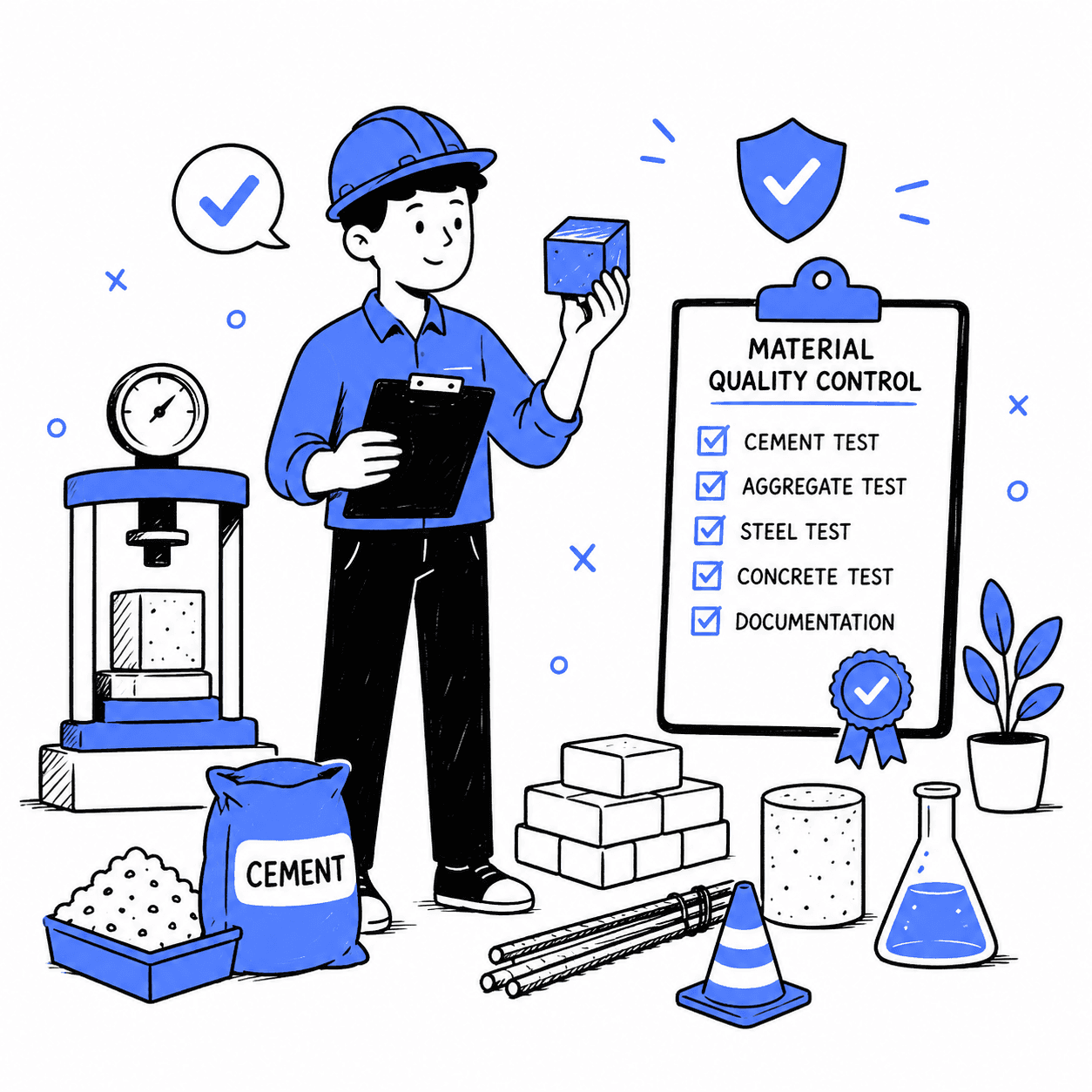
PE Exam Construction Material Quality Control: Tests, QA/QC, and Exam Decisions
Learn how to solve PE Civil Construction quality-control questions involving material tests, QA/QC, concrete, welds, bolts, maturity, and compaction.
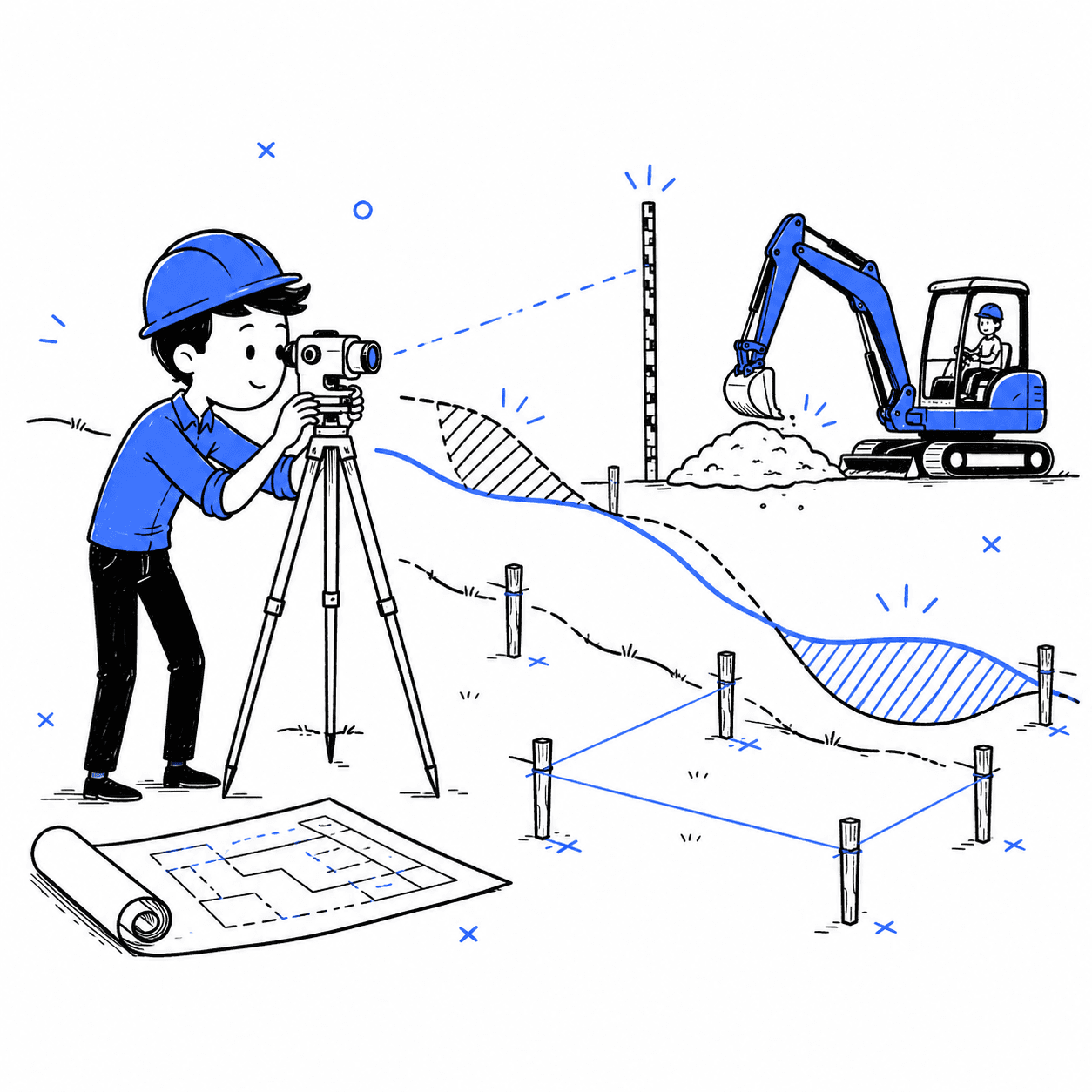
PE Exam Construction Earthwork & Site Layout: Concepts, Methods, and Exam Scope
Learn how to approach PE Construction earthwork and site-layout topics, including cut and fill, volume methods, material states, benchmarks, staking, and site control.