PE Construction Exam Topics and NCEES Study Guide

The NCEES PE Civil Construction exam covers eleven knowledge areas, from soil mechanics and estimating to construction operations, temporary supports, and safety. The official syllabus gives a question range for each area, which helps you understand the emphasis of the exam and plan your preparation.
If you're balancing study with a full-time job, start with two things: the specification for your exam date and an honest look at your strengths and gaps. You can then choose practice, references, and lessons that help you make progress each week.
The table below summarizes the official NCEES Construction specification. The ranges show the published emphasis; they are not guaranteed counts for your individual exam.
| NCEES knowledge area | Published question range |
|---|---|
| Soil Mechanics | 6–9 |
| Site Layout and Development | 5–8 |
| Material Properties | 5–8 |
| Estimating Quantities and Costs | 6–9 |
| Project Planning and Scheduling | 7–11 |
| Material, Production, and Execution Quality Control | 7–11 |
| Structural Mechanics | 7–11 |
| Hydraulics and Hydrology | 4–6 |
| Construction Operations and Methods | 9–14 |
| Design for Support of Construction Loads | 10–15 |
| Health and Safety | 4–6 |
Use this guide to understand those topics, check your references, build a study routine, and compare preparation options. Keep the official specification handy as you work through it.
Which NCEES specification applies to your exam date
Choose your references based on when you will take the exam. NCEES currently publishes separate Construction documents for exams before April 2027 and exams beginning April 2027.
Exams before April 2027
Use the Construction specification and standards list for exams before April 2027. Its topic specification took effect in April 2024.
Exams beginning April 2027
Use the Construction document with design standards effective April 2027. Its topic areas and question ranges remain the same as those shown above, while the standards list changes.
Before buying a book or course, check which standards period it supports. A resource can be useful for learning a concept while still needing updates for your sitting. The NCEES Civil exam page is the best place to check for changes.
What each PE Construction exam topic means for your preparation
Below are the eleven official knowledge areas, followed by practical suggestions for studying them. The examples are original teaching scenarios, not predictions of questions on your exam. Use the NCEES topic specification for the complete subtopic list.
Soil Mechanics
Study earth pressure, settlement, effective and total stress, bearing capacity, and slope stability.
For a practice exercise, sketch a soil profile and mark the groundwater level before choosing an equation. Then explain what each input represents. This gives you a way to check your reasoning before you start calculating.
If your answer is wrong, ask whether the mistake came from the model, the inputs, or the arithmetic. Those problems need different fixes. A unit conversion drill won't resolve confusion about which stress a calculation requires.
Site Layout and Development
Review layout control, curve elements, and site investigations.
Try a small site layout exercise with a benchmark, proposed elevations, and an adjacent utility. Identify which information you need before carrying a calculation through. Write the datum beside your sketch so you can check that your inputs stay consistent.
Field experience can help you visualize the problem. During study, also practice explaining the geometry and assumptions on paper. That makes it easier to notice when a familiar construction situation has been presented with unfamiliar dimensions or notation.
Material Properties
Review soil, rock, aggregates, concrete, steel, and wood.
Make a comparison sheet that connects each material to the properties you would need for a particular decision. For example, ask what information is missing before comparing two proposed concrete mixtures. Keep the exercise focused on the decision rather than collecting isolated facts.
When you use a worked solution, check why the author selected a property or adjustment. Write a short explanation in your own words. Being able to locate a value is helpful; understanding its role helps you use it correctly.
Estimating Quantities and Costs
Practice takeoffs, cost estimates, engineering economics, and productivity analysis.
Use a simple original estimate to rehearse the whole process: identify the required quantity, convert units, apply only the stated allowances, and check the result. Keep material quantity and monetary cost on separate lines so you can trace an error.
For an equipment comparison, list the operating assumptions before comparing totals. If you make an assumption during practice, label it. That habit helps you distinguish information the problem provides from information you have supplied yourself.
Project Planning and Scheduling
Review sequencing, activity analysis, critical path methods, resource scheduling, and time–cost decisions.
Draw a short activity network and explain the dependencies out loud. Then change one duration and work through what happens to the schedule. Include both a critical activity and an activity with available float in your practice.
Don't stop at identifying the longest path. Check whether your reasoning still works after the change. If you struggle, return to the dependency relationships before trying to memorize another scheduling procedure.
Material Production and Execution Quality Control
Review material testing, installation checks, concrete placement and maturity, and compaction.
For each practice decision, identify what was measured and what requirement controls the judgment. Keep the test result, acceptance criterion, and conclusion separate. This makes a worked solution easier to check.
Take particular care with concrete acceptance language. The number of specimens, definition of a test, averaging window, and applicable edition can matter. During study, trace the rule to its actual source instead of relying on a shortened note that leaves out a condition.
Structural Mechanics
Study loads, stresses, structural members, and structural systems.
Begin an original exercise with a free-body diagram. Mark the supports, applied loads, and assumed load path before calculating. At the end, ask whether the direction, units, and scale of the answer make sense.
When reviewing a mistake, keep the diagram with your corrected work. A clean final calculation can hide the modeling error that caused the problem. Your study notes should show what changed in your reasoning so you can recognize a similar situation later.
Hydraulics and Hydrology
Review drainage, runoff, and detention or retention.
Use a site drainage scenario to practice selecting a method. Identify the requested output and the available inputs before searching for an equation. Then explain why the method fits the situation you have been given.
If you are comfortable with calculations but slow at finding the right relationship, make reference navigation part of the exercise. Record the document, section, and search term that helped. That gives your next practice session a specific improvement to work on.
Construction Operations and Methods
Review lifting, cranes, pumping, equipment, deep foundation installation, and earthwork.
Try an original equipment selection exercise and list the assumptions that could change your choice. For a lifting scenario, practice identifying the information you would need before evaluating it. For earthwork, write the meaning of each volume beside the number.
Avoid treating a familiar piece of equipment as a shortcut to the answer. Read the stated conditions carefully and check that your method addresses the actual question. Your practice should build a repeatable decision process.
Design for Support of Construction Loads
Review formwork, falsework, shoring, bracing, excavation support, and construction-stage loads.
Sketch an original construction stage and trace where each load goes. Mark the members and connections you would need to evaluate. Then identify the reference needed for the next step.
Keep temporary conditions visible in your notes. When a solution seems confusing, check whether you have assumed a different construction stage or support arrangement. A carefully labeled sketch can make that difference easier to see than another page of calculations.
Health and Safety
Review OSHA requirements and work-zone or public safety.
Use a hazard recognition exercise to practice connecting a situation with the appropriate reference. Write down the missing facts you would need before reaching a decision. Check the provision and its conditions together.
Treat exam study as preparation for answering the stated problem. Real construction work also requires project-specific safety planning and the applicable legal requirements. A short exam review note should never become a substitute for those responsibilities.
How exam topics relate to professional standards
The Construction syllabus reflects the work of civil engineers, while the standards list identifies references used for the exam. NCEES explains that professional practice surveys help inform its specification updates. See its announcement about the April 2024 Civil specifications.
For your preparation, the important distinction is between the edition used in current field practice and the edition listed for your exam. Always check the latter before practicing a code-based problem.
What changes in the April 2027 standards list
The table highlights selected changes. Use the official PDFs for the complete lists.
| Reference | Before April 2027 | Beginning April 2027 |
|---|---|---|
| ACI 318 | Not listed | 2019 (2022) |
| Formwork references | ACI 347R 2014 and ACI SP-4 eighth edition 2014 | ACI SP-4 eighth edition 2014, including ACI 347R in its appendix |
| AISC Steel Construction Manual | Fifteenth edition 2017 | Sixteenth edition 2022 |
| MUTCD Part 6 | 2009 with May 2012 revisions | Eleventh edition 2023 |
| CFR Title 29 | July 2020, parts 1903 and 1926 | 2024, parts 1903, 1904, and 1926 |
| Separate masonry bracing standard | Standard Practice for Bracing Masonry Walls Under Construction 2012 | Not listed |
If your study schedule crosses that date, put the applicable standards period on your checklist now. It is easier to make the right purchase once than to discover an edition mismatch halfway through your preparation.
What reference materials are provided during the exam
NCEES supplies the PE Civil Reference Handbook and the listed design standards electronically. You can access the handbook through MyNCEES. Obtain standards for preparation through their publishers; NCEES supplies them for use during the exam.
Can you bring personal reference books
No. Your personal handbook, textbooks, notes, and review guides cannot be brought into the exam room. The official Civil exam page explains the reference restrictions.
A book may still be useful while you prepare. Just include practice with electronic references so your study routine reflects how you will locate information during the exam.
How to practice searching the supplied references
Start with a problem and identify the likely document before searching. Write down a useful search term, locate the relevant section, and read the surrounding conditions before using the information.
NCEES describes chapter-based access for the supplied standards, so practice knowing where information lives instead of depending on a search across an entire collection. A small lookup log can help: topic, document, section, useful search term, and what you initially missed.
When you review a slow lookup, decide whether you need a better search term or a better understanding of the reference's organization.
Exam format eligibility and registration
What is the computer based exam format
The PE Civil Construction exam has 80 questions and eight hours of exam time within a nine-hour appointment. The appointment also includes the agreement, tutorial, and an optional 50-minute scheduled break. It is offered year-round at approved Pearson test centers.
Questions include multiple-choice and alternative item types. The NCEES Examinee Guide describes formats such as multiple correct options, numerical entry, drag and drop, and point and click.
Practice pacing as well as solving. Some exercises need a calculation, others need a reference lookup, and others need careful interpretation of a figure. Your study routine should give you experience with all three tasks.
Who is eligible to take the exam
Eligibility is determined by your licensing board. Check its education, experience, approval, and registration requirements before assuming that advice for another state applies to you.
Use the NCEES licensing board directory to find your board, then follow its current instructions.
Where to register and schedule
Review your board's process, create or sign in to your MyNCEES account, and register for the exam. After the necessary approval and authorization, schedule your appointment through the official process.
Registration and scheduling are separate steps. Read your confirmation carefully, and use the Examinee Guide for the current procedures.
How to build a study plan from the topic map
A useful PE Construction study plan starts with evidence about your own preparation. The syllabus tells you the scope; practice tells you where your next hour of study can help most.
Start with a diagnostic by topic
Work through a small selection of problems from every knowledge area. Record whether you were correct, how long you took, whether you needed a reference, and why you struggled.
Use error categories such as concept, method selection, reference location, units, arithmetic, and time management. “I need more soil mechanics” is a broad observation. “I confuse the stress input and lose time checking it” gives you something specific to work on.
If you have taken the exam before, use your diagnostic report alongside fresh practice. Look for patterns, then test whether they are still present. Avoid rebuilding your plan entirely around how one attempt felt.
Set priorities from practice results
Give extra attention to areas that have substantial published emphasis and repeated weaknesses in your practice. Construction operations and support of construction loads deserve a careful review, but keep every area in your plan.
Recheck topics you use at work. Familiarity with a field task does not automatically tell you how quickly you can solve a written problem with the supplied references.
After a review session, try a fresh problem without looking at the solution first. If the same error returns, make the next session smaller and more focused. That is more useful than repeatedly reading a chapter you already recognize.
A sample twelve week plan for working engineers
Here is an illustrative schedule you can adapt. Twelve weeks is a planning example, not a required preparation period or a promise of readiness.
| Period | Main task | Checkpoint |
|---|---|---|
| Week 1 | Confirm the exam date, references, and baseline. | Identify specific gaps in concepts and reference navigation. |
| Weeks 2–5 | Review foundations and solve targeted problems. | Explain your method before checking the solution. |
| Weeks 6–8 | Mix topics and rehearse reference searches. | See whether recurring mistakes decrease on fresh questions. |
| Weeks 9–10 | Complete a timed simulation and repair gaps. | Turn the results into a focused list of study tasks. |
| Weeks 11–12 | Use fresh mixed practice and confirm logistics. | Review remaining gaps and your pacing approach. |
Build a weekly routine you can repeat. For example, use two shorter sessions for concepts and worked problems, one session for reference practice, and a longer weekend block for mixed questions. Adjust that pattern to your actual availability.
Leave room for missed sessions. If work gets busy, return to the next useful task instead of trying to recover every missed hour at once. At the end of each week, choose the few changes that will improve the following week's practice.
Where to find practice exams and problems by topic
Official NCEES practice exams
Find official Construction practice materials through the NCEES practice material portal, linked from the Civil exam page. Check the discipline and applicable specification before purchasing.
Use official material to understand the style and scope of its examples. Then use additional practice to work on specific gaps. Repeating a question until you remember its answer is different from solving a new question with the same underlying concept.
Practice problems covering the Construction syllabus
Choose a question bank or practice set that shows how its problems map to the eleven areas. Look for worked solutions and clear references. A large total question count is less useful if you cannot tell which gaps the questions help you address.
PEwise Construction practice exams include two 80-question exams, worked solutions, and results by topic. The page also offers a free ten-question sample so you can inspect the practice interface before enrolling. These are PEwise study materials, separate from official NCEES practice exams.
After any practice session, make a small review table with the topic, error category, reference used, correction, and next practice task. Keep the correction specific. “Review formwork” is harder to act on than “redraw the assumed supports before selecting the member check.”
Save fresh material for later mixed practice. It gives you a clearer view of your progress than a score built mainly from questions you have already solved.
How to choose study materials for each preparation task
Start with the task you need help with. You may need a reference for a technical provision, a textbook for a concept, a guide for organization, or practice for feedback. One resource does not have to do everything.
| Resource | Useful role | What to check |
|---|---|---|
| Official references | Locate the supplied technical information. | The edition listed for your exam date. |
| Textbooks and review guides | Understand concepts and worked methods. | Relevant scope, clear explanations, and edition alignment. |
| Question banks and practice exams | Test application, pacing, and gaps. | Topic mapping and worked solutions. |
| Flashcards | Rehearse definitions and distinctions. | Accurate content that supports problem practice. |
Study guides and textbooks
Choose a Construction study guide that explains methods clearly and maps its coverage to the NCEES specification. Check whether it is sold separately or included with a course, and whether its standards editions apply to your exam date.
For deeper reading, start with the books on the official standards list. ACI SP-4 Formwork for Concrete supports formwork study, the AISC Steel Construction Manual supports steel reference practice, and Design and Control of Concrete Mixtures supports concrete materials study. Choose the edition listed for your exam date.
A broader textbook can help with a weak concept, but compare its coverage with your Construction syllabus before committing to a long reading plan. These suggestions prioritize the references NCEES lists; they are not a ranking based on candidate reviews.
Mobile apps for Construction study
For mobile study, you can use PEwise through your web browser; there is no separate PEwise mobile app to install. Lessons play on mobile devices, while the practice simulator is best used on a laptop or desktop so you can view the references and calculator beside the question.
Use short mobile sessions for review or a small question set. Schedule longer sessions when you need to read diagrams carefully, compare references, and show your work. Before buying a standalone app, confirm that its Construction content matches the applicable syllabus.
Flashcards for NCEES Construction topics
Flashcards can help you review definitions and distinctions in short sessions. Before buying a set, check that its Construction coverage matches the current topic list and that code-based cards identify the applicable reference edition.
You can also make cards from your own error log. Put a question or distinction on the front and a concise explanation on the back. Keep the reference nearby when a card depends on a technical provision. Pair recall practice with fresh problems that require you to apply the idea.
Weekly topic review subscriptions
Check whether a subscription provides continuing access to existing materials or delivers new topic reviews each week. Those features serve different needs. Before subscribing, confirm the Construction coverage, delivery schedule, renewal terms, and cancellation process.
If weekly accountability is your main need, consider scheduled support as well. PEwise offers a weekly live Power Hour; check its Construction course page for the current session details. A live session is a different format from a recurring lesson-delivery subscription.
Where to buy study materials
Use MyNCEES for official practice materials, the relevant publishers for standards, and provider pages for review guides and course resources. Before checking out, confirm the discipline, supported standards period, access length, and whether the material is included in something you already own.
How to compare online courses review providers and tutors
The best course for you depends on how you learn and the structure you need. Compare the explanation quality, topic map, practice feedback, support, schedule, access period, and total cost.
Use the table below to compare preparation formats. A course may combine several of them, so check what your chosen enrollment actually includes.
| Preparation option | Useful when | What to check |
|---|---|---|
| Self-paced lessons | Your work schedule varies and you need to revisit explanations. | Topic coverage, access length, practice, and available support. |
| Scheduled live classes | Fixed class times help you keep studying. | Attendance expectations, recordings, and exam-date alignment. |
| Group question sessions | You want regular support with questions from your study. | The session format and how to submit questions. |
| Individual tutoring | A specific difficulty persists after independent practice. | Construction experience, reference editions, and the agreed session scope. |
PEwise combines self-paced lessons and practice with a weekly live Power Hour. You can inspect the free preview and curriculum on the Construction course page before deciding whether that format fits your needs.
Which online course fits your preparation needs
Try a sample lesson before deciding. Can you follow the reasoning? Can you pause, work the problem yourself, and use the explanation to correct a mistake?
If you need fixed class times to keep moving, look closely at live schedules. If your work hours vary, compare self-paced access and available support. Ask how a provider handles a topic taught mainly through practice rather than a dedicated lesson.
When tutoring may help
Tutoring can be useful when a specific difficulty persists after repeated practice. Ask about the tutor's Construction experience, familiarity with your applicable references, and approach to reviewing your attempted solutions.
Bring a few attempted problems and explain where your reasoning breaks down. That gives a session a clear purpose. Group question sessions and individual tutoring are different services, so confirm which one you are buying.
Where candidates can find forums and study communities
Two places to explore are Engineer Boards' PE Exam forum and Reddit's PE Exam community. Look for recent Construction discussions, useful study questions, and clear community rules.
Communities can help with accountability and resource discovery. Check the date of advice, especially when someone discusses a book edition or older exam format. A detailed personal experience is still one person's experience.
Use NCEES and your licensing board for official requirements. Discuss study concepts and original practice problems while respecting exam confidentiality. A small study group can also work well if everyone arrives with an attempted solution and a specific question.
How to use PEwise for targeted Construction preparation
Start with a gap you have identified, then inspect the relevant material on the PEwise Construction course page. The published curriculum includes the following starting points.
| Your preparation need | Material to inspect on the course page |
|---|---|
| Estimating and economic decisions | Engineering Economics and Cost Analysis; Project Cost and Schedule Management. |
| Construction support | Formwork Systems and Design. |
| Safety reference practice | OSHA Scaffolding Safety; OSHA Excavation Safety. |
| Drainage concepts | Fundamental Principles of Open Channel Flow; Culvert Hydraulics. |
This is a guide to finding material, not a claim that a single module exhausts a knowledge area. Review the full syllabus map and the format of the support you need.
PEwise's course content is created by Mahdi Bahrampouri, Ph.D., Civil Engineer and Co-Founder. The course is self-paced, with weekly live support. The listed price is $149 for 90 days of access; see the course page for current terms.
Try the free Construction Operations and Methods preview to see whether the explanations suit you. Then use practice feedback to choose your next task: review a concept, rehearse a reference search, or solve a fresh problem.
Explore PEwise Construction course coverage and the free preview. You can also inspect the Construction practice sample before choosing paid preparation.
If you're looking for the best PE exam prep course for your schedule, explore PEwise's PE Civil courses and try a free preview before enrolling.
Frequently asked questions about Construction preparation
Where can I find the official Construction syllabus
Open the NCEES Civil exam page and select Construction under the period that applies to your exam. Download the specification and check its standards page before choosing resources.
Which topics should I study first
Start with a diagnostic across all eleven areas. Give more time to repeated weaknesses in areas with substantial published emphasis, while keeping review time for the rest of the syllabus.
Can I bring my own books to the exam
No. Use the supplied electronic handbook and listed standards during the exam. Your textbooks and review guides are preparation resources.
How much preparation time should I plan around work
Use your baseline, exam date, and available study hours to build the schedule. The twelve-week example above is a starting point you can adapt. Reserve time for problems, reference searches, and reviewing mistakes.
Should I use flashcards or practice problems
Use flashcards for recall and distinctions, then practice applying those ideas in problems. A strong recall score does not show whether you can choose a method or interpret a new situation.
How can I check whether a course supports my weak areas
Compare its curriculum map with the official syllabus. Inspect a sample explanation and ask whether your weak subtopic has dedicated instruction, worked practice, or both. Choose preparation you can evaluate before enrolling.
Keep Reading

Best PE Construction Study Materials: Courses, References and Practice
Overwhelmed by PE Construction study options? Discover which courses, books, references and practice exams deserve a place in your study plan. This guide helps you choose with confidence, avoid duplicate purchases and make the most of your study time and budget.

Best PE Civil Construction Exam Prep Courses
An honest 2026 comparison of PE Civil Construction prep courses — price, format, depth coverage, and pass guarantees — to help you pick the right fit.
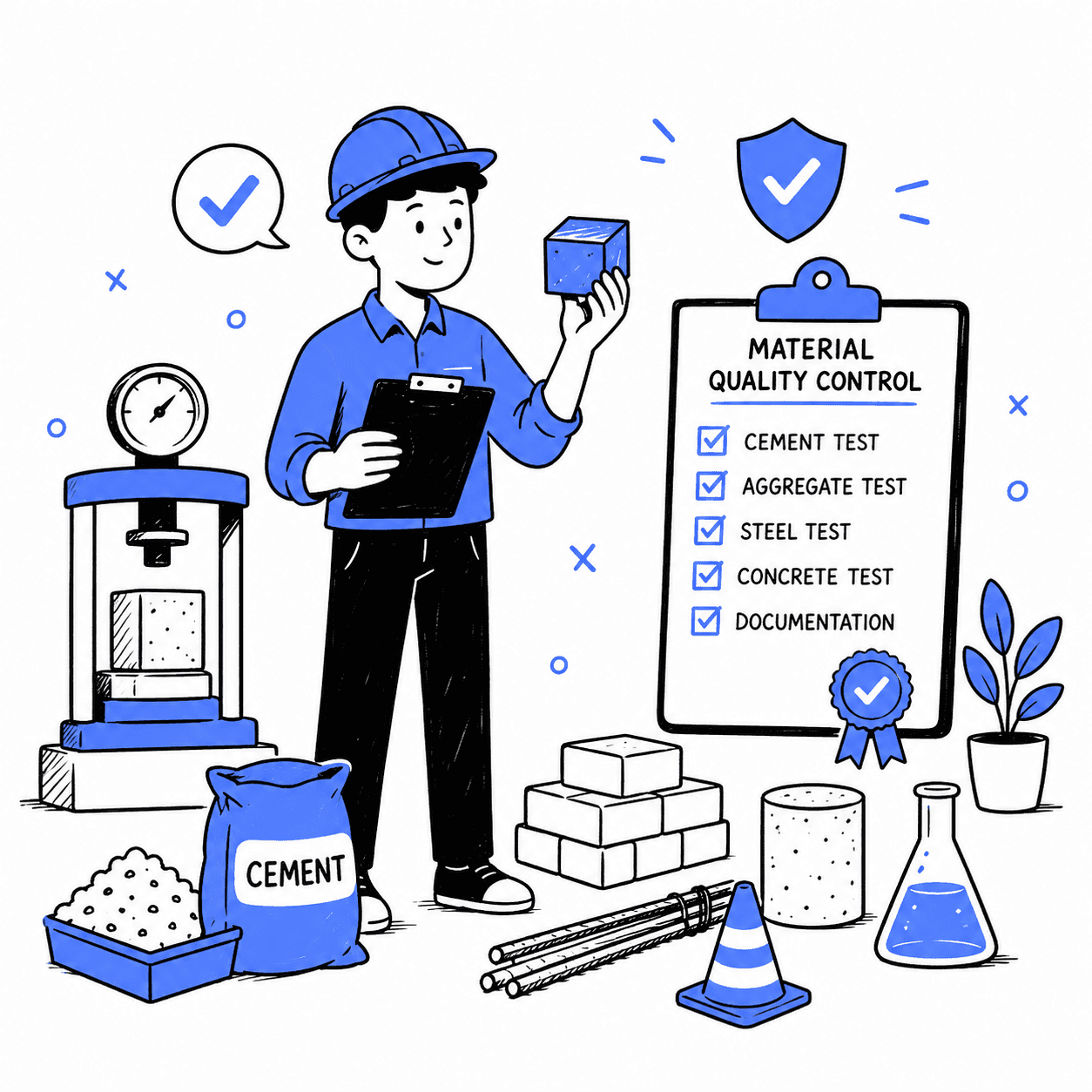
PE Exam Construction Material Quality Control: Tests, QA/QC, and Exam Decisions
Learn how to solve PE Civil Construction quality-control questions involving material tests, QA/QC, concrete, welds, bolts, maturity, and compaction.