Preparing for the PE Civil Exam After Years Out of School
Years out of school and unsure where to start with PE Civil prep? Learn how to identify rusty skills, refresh essential fundamentals, and fit studying around work and family. Use a practical four-week refresher plan to get started before moving into full exam preparation.

You’ve spent years solving real engineering problems. Then you open a PE Civil practice question and catch yourself thinking, “I used to know how to do this.”
That moment can make returning to study feel intimidating. How much have you forgotten? Where should you start? And how will you fit studying around the responsibilities you have now?
Preparing for the PE Civil exam after years out of school starts with answering those questions. Some concepts may come back with a short refresher. Others may need more explanation and practice. A few carefully chosen questions can help you see the difference and decide where to spend your time.
This guide will help you check what you remember, refresh the skills you need, and build a routine that fits your week. You’ll also find a four-week return-to-study plan to help you get started before moving into full exam preparation.
How a long break from school changes PE Civil preparation
Years since graduation tell you little about which topics need review. Your daily work, retained knowledge, and ability to solve unfamiliar problems give you a more useful starting point.
What your professional experience can help you retain
Work may have kept you comfortable with drawings, construction sequences, material behavior, or design decisions. That experience can help you interpret a problem and recognize unreasonable results.
Consider an illustrative example: an engineer who regularly reviews drainage designs may recognize hydraulic relationships immediately, yet rarely calculate them without software. The knowledge is useful, but independent calculation still needs checking.
What you should check instead of assuming you remember
Another engineer returning after a career interruption may need to rebuild several prerequisites and a study routine at the same time. Start by checking four things: topic familiarity, calculation fluency, reference use, and actual weekly availability.
Treat uncertainty as something to investigate. If concern about the gap keeps you postponing that first session, begin with a small task: attempt one question and record exactly where you stopped. PEwise's exam anxiety guide offers further help with preparation-related uncertainty.
Check the current exam before using your old study materials
The official NCEES PE Civil page describes a computer-based exam available year-round, with 80 questions and eight hours of testing within a nine-hour appointment. Choose one of five disciplines: Construction, Geotechnical, Structural, Transportation, or Water Resources and Environmental, commonly shortened to WRE.
Does the PE Civil exam still have a breadth section
The current PE Civil exam follows a discipline-specific specification. The shared breadth section described in older preparation advice is historical. Two CBT sections do not mean you should follow an old breadth-and-depth study calendar.
Some subjects overlap across disciplines. Study the knowledge areas listed for your selected exam rather than assuming every undergraduate civil subject needs equal attention. See the current PE Civil format guide for more detail.
Which handbook and standards apply to your exam date
NCEES supplies the electronic handbook and specified design standards during the exam; personal reference books are not permitted. Get the handbook through MyNCEES and obtain lawful study access to the listed standards separately.
Match documents to your test date. NCEES currently publishes groups effective before April 2027 and beginning April 2027. Use the assigned editions, even when a newer edition exists. PEwise's 2027 changes guide explains that date boundary.
Diagnose why a PE Civil problem feels difficult
A useful baseline identifies what to change in your next session. Choose a small set of current, discipline-aligned questions with explained solutions. Include different specification areas rather than selecting only topics familiar from work.
Attempt the questions before reading their solutions. Use the relevant references, record where you hesitate, and distinguish an independent answer from a guess or a result obtained after a hint. This first session is an investigation, so allow time to understand the difficulty before imposing a tight timer.
Separate concept gaps from calculation and reference problems
Record the topic, your chosen method, unit handling, reference used, and reason you stopped. The following categories can help you turn that record into an action.
| What happened | What to investigate | Next action |
|---|---|---|
| You could not explain the physical relationship | A concept or prerequisite gap | Review the underlying idea, then try a fresh question |
| You understood the concept but chose the wrong method | Method applicability | Compare the conditions required by each method |
| Your setup worked but the answer failed | Units, arithmetic, or calculator use | Isolate and repeat the troublesome step |
| You knew what you needed but could not locate it | Reference familiarity | Find the document and chapter, then use it again later |
| The solution looked familiar but you could not reproduce it | Dependence on worked examples | Close the solution and attempt an unfamiliar variant |
| You solved work-related topics but skipped others | Incomplete coverage | Sample the unchecked specification areas |
| Planned sessions repeatedly did not happen | Available capacity | Reduce the weekly commitment and test it again |
These are provisional explanations. Retest before deciding that a whole subject needs relearning. One unit-conversion mistake should lead to a conversion drill, not automatically to another week of theory.
Map your work experience to unchecked exam areas
Beside each specification area, write “checked,” “needs review,” or “not yet checked.” Familiarity at work is a reason to test a topic, not proof that you have covered it.
Keep the sample's limits clear. A few questions can expose obvious gaps but cannot represent an entire discipline or establish exam readiness. Use the results to choose your first repair targets.
Refresh the fundamentals that block your chosen discipline
Refresh a fundamental when an attempted problem gives you a reason to. If you cannot rearrange an equation reliably, work on algebra. If you cannot explain the forces in a free-body diagram, review equilibrium before attempting more complicated analysis.
Rebuild units algebra and calculator habits
Write units beside your quantities, check that the result has the expected dimensions, and practice rearranging equations before substituting values. Where applicable, distinguish mass from weight, total from effective stress, and similar-looking quantities with different physical meanings.
Use an approved calculator during preparation. Practice the functions you need for your problems, including scientific notation, parentheses, and angle settings. Consult PEwise's calculator guide and the current NCEES Examinee Guide before selecting a model.
Choose prerequisites from your actual discipline problems
The examples below are starting points to investigate, not complete refresher syllabi. Your selected specification and attempted questions should determine what you review.
| Discipline | Possible starting points | What to demonstrate |
|---|---|---|
| Construction | Statics, quantities, units, scheduling relationships | Set up the relevant calculation and explain its inputs |
| Geotechnical | Soil phase relationships and effective stress | Distinguish the quantities involved before calculating |
| Structural | Equilibrium, load paths, member behavior | Connect loads to the response being evaluated |
| WRE | Continuity, energy relationships, unit conversions | Explain the flow assumptions behind your method |
| Transportation | Geometry, units, relevant flow calculations | Identify the relationship and its conditions of use |
Choose two or three immediate targets. A long list of every forgotten college topic makes it harder to see which repair will help you solve the next question.
Move from a worked example to an independent solution
Attempt a problem, identify the missing prerequisite, and review a focused explanation. Then close the explanation and solve a fresh question. Write one sentence explaining why the method applies.
For Geotechnical preparation, use the exam topic guide to connect a repair target to its specification area, then attempt a fresh problem. Recognizing the displayed steps is only the beginning; being able to choose and apply them is the useful outcome.
Use a four week bridge to return to studying
This example allocates eight hours per week, or 32 hours across four weeks. It is a suggested refresher phase, not an official NCEES schedule or a validated guarantee of readiness. Adjust it to the gaps you find and the time you can sustain.
| Week | Example eight-hour allocation | Output |
|---|---|---|
| 1 | 1 hour checking documents; 3 hours baseline questions; 2 hours classifying errors; 2 hours auditing time and planning | Current documents, specific repair targets, realistic availability |
| 2 | 2 hours prerequisite review; 4 hours fresh problems; 1 hour reference practice; 1 hour reviewing progress | Evidence that repaired prerequisites work independently |
| 3 | 1 hour targeted refresh; 4 hours varied problems; 2 hours reference and calculator practice; 1 hour review | A comparison of performance on familiar and unfamiliar questions |
| 4 | 3 hours fresh baseline questions; 2 hours comparing errors; 1 hour checking capacity; 2 hours choosing the full plan | Remaining gaps, resource needs, next schedule, reassessment date |
Week 1 Establish your baseline and realistic availability
Read your specification, attempt the baseline, and classify the difficulties. Observe when studying actually fits around your responsibilities. Finish with a short repair list and honest weekly capacity, even if that capacity is lower than you expected.
Week 2 Repair the prerequisites behind repeated errors
Work through your first targets using focused instruction followed by fresh questions. When the same obstacle remains, revisit the explanation or ask for help. Repeating a repair week is reasonable when it gives the next phase a stronger foundation.
Week 3 Apply refreshed skills to unfamiliar questions
Vary wording, values, and problem context so recognition cannot carry the whole solution. Decide which method applies before calculating, and practice locating the relevant reference. Record whether an error came from understanding, execution, or retrieval.
Week 4 Decide what your full preparation needs
Revisit the baseline's weak areas with new questions. Compare repeated errors and independent solving, then select a full schedule using your remaining gaps and measured availability.
Strong results may let you shorten the bridge. Persistent gaps may require a longer refresher or structured instruction. Either way, continue into a complete plan; the 32-hour example excludes full-length simulations. PEwise's free PE Civil study planner provides the separate 12- and 24-week frameworks.
Fit the bridge around work family and a career restart
Put study sessions beside your real commitments, including project travel, caregiving, and any training required by a return to employment. Choose times when you can work through a calculation without repeatedly switching tasks.
Build a normal week and a reduced workload week
An eight-hour week could contain three 60-minute weekday sessions, a three-hour Saturday problem block, and a two-hour Sunday review. Give each session a specific output: one prerequisite practiced, fresh questions solved, or recurring errors rechecked.
A demanding week might support two 45-minute sessions and one 90-minute block, totaling three hours. Use that week to maintain progress on selected targets. Adjust the timeline if lower availability continues; three hours cannot carry the same planned work as eight.
Agree on protected time with the people affected by your schedule. A specific request is easier to plan around than a general promise to “study more.”
Reassess after a missed study week
Return to your latest repair target and attempt a fresh question. Check whether the interruption changed what you remember, then revise the next week's commitments. Use the planner for broader calendar adjustments. If you need more preparation time, PEwise's study-hours guide explains how to update your estimate.
Choose materials for the gaps you found
The right resource should solve a problem you can name. Before buying anything, complete this sentence: “I need this resource because I currently struggle to…”
When a review course is useful after years away
A course can help when you need a teaching sequence, clearer explanations, or support with recurring conceptual obstacles. Test it with a lesson on a rusty topic, followed by a fresh problem solved without the displayed solution.
If you need scheduled appointments to follow through, consider live instruction. If your availability changes, check flexible pacing and access terms. PEwise's self-study and prep-course comparison and course comparison guide cover those choices in detail.
How books question banks and apps support different tasks
| Need | Resource to consider | What to check |
|---|---|---|
| Understand a concept | Focused lesson or textbook section | Assumptions, explanation, and an independent follow-up problem |
| Practice method selection | Worked examples and fresh topic questions | Reasoning and applicability conditions |
| Fill coverage gaps | Aligned curriculum or question bank | Selected discipline and exam-date fit |
| Rebuild reference familiarity | Assigned handbook and listed standards | Correct documents, editions, and lawful access |
| Use short study windows | Recall tool, timer, or calendar app | Whether it supports a specific task |
| Assess later pacing and stamina | Discipline-specific practice exam | Coverage, solutions, timing, and reference workflow |
Use a review book for explanations and a question bank for independent attempts. Flashcards can support recall, but they cannot show whether you can set up a multi-step problem. PEwise's study-materials guide helps you compare the wider options without duplicating purchases.
Where to find practice for your current discipline
Start with official practice available through the NCEES portal, then evaluate commercial questions for any remaining need. Older “depth” books may contain useful problems, but check their relevance to the current discipline and assigned references. Use the PE Civil practice-exam comparison to evaluate additional options.
Recognize when you can move into a full study plan
The refresher has served its purpose when you can see what you retain, what still needs teaching, and how much work fits into your week. You do not need to finish learning every exam topic before beginning a complete plan.
Signs your refresher is working
Look for independent progress on fresh questions: you explain the principle, select an applicable method, handle units consistently, and locate the necessary reference. Previously repeated mistakes should become less frequent across several sessions.
Also check your routine. A manageable plan should produce completed work you can review, rather than a growing backlog of videos.
Signs you need more explanation or a longer runway
Extend targeted review when the same conceptual error persists or you still depend on hints to start. Ask for help with your attempted setup and the exact point of confusion. Reconsider the calendar when your available time repeatedly falls below the plan.
These signals guide your transition; they do not predict the official result. Later, use PEwise's practice-exam guide to assess timed performance, reference use, and stamina.
How PEwise can support your return to studying
PEwise offers self-paced preparation for Geotechnical, WRE, Construction, and Structural. The dedicated course pages describe short visual lessons, practice, and weekly live support.
Try a preview lesson that addresses a gap from your baseline. Then test whether you can apply the explanation to a fresh problem. Review the selected course's curriculum and support against your needs.
The course pages currently list 90-day access. A refresher followed by a longer schedule may exceed that period, so align enrollment with when you will use the course and confirm extension terms. If you need a fixed teaching timetable, consider whether a live course better fits your routine.
Questions about returning to PE Civil study
Can I prepare for PE Civil 10 or 20 years after graduation
Yes, you can work toward the exam after a long academic gap. Start with your licensing board's requirements and a baseline of your current skills. The number of years since graduation does not tell you which topics need repair. Use attempted problems and available study time to shape preparation rather than choosing a schedule by graduation year.
Do I need to relearn my entire engineering degree
Begin with the knowledge areas in your selected PE Civil specification. Refresh prerequisites when practice reveals that they block understanding or calculation. For example, a units problem calls for focused conversion practice, while difficulty identifying forces may require equilibrium review. Build those repairs into exam preparation instead of automatically repeating every undergraduate subject.
Is a career break different from being out of school
Yes. An engineer who has worked continuously may retain relevant professional judgment while needing calculation practice. Someone returning after a career interruption may also be rebuilding familiarity with technical work and a new routine. Both should diagnose retained skills, but the combination of study needs and competing responsibilities may differ.
Can I use the PE review books I already own
Use older books selectively for concepts that remain relevant. Compare their topics, methods, and referenced editions with the current specification. A book written for the former breadth/depth format should not define your present study calendar or exam reference list. Add current resources only where your existing materials leave a demonstrated gap.
How do I plan study when I can only manage a few hours a week
Choose a small weekly output, such as repairing one prerequisite and applying it to fresh questions. Reserve some of that time for reviewing mistakes. Extend the calendar to reflect your actual capacity and reassess after several weeks. Do not compress a plan by removing entire specification areas or treating distracted study as equivalent to focused work.
Do I need to retake the FE because I graduated years ago
Graduation date alone does not determine your licensing pathway. Confirm your FE record and current eligibility directly with your licensing board before planning an exam sequence. NCEES provides licensure information, and PEwise's FE waiver guide explains questions to investigate. An FE waiver is not available universally.
What if I understand a solution but cannot solve a new problem
Return to the step you cannot choose independently. Explain what information makes that step appropriate, then attempt a different question without viewing its solution. Change the context as well as the numbers. If the difficulty persists, bring your attempted setup to an instructor or mentor so the explanation addresses the missing reasoning.
Your first task is manageable: open the current specification, attempt a small baseline, and identify the next skill to repair. Once you have tested that process and your weekly availability, use the PE Civil study planner to build the rest of your preparation.
Keep Reading

Inside PEwise’s PE Civil Prep Courses: How the Learning System Works
What happens after you watch a lesson? Step inside PEwise’s PE Civil prep courses to see how lessons, practice problems, quizzes, and instructor support fit together—and how practice-exam feedback can guide your next study session.

PE Civil Self-Study vs. Prep Course: Which Fits Your Situation?
Can you build a PE Civil study plan and work through mistakes on your own, or would structured lessons help? Compare self-study, on-demand and live courses, and targeted support—then try a two-week plan to see which approach fits your schedule and learning needs.
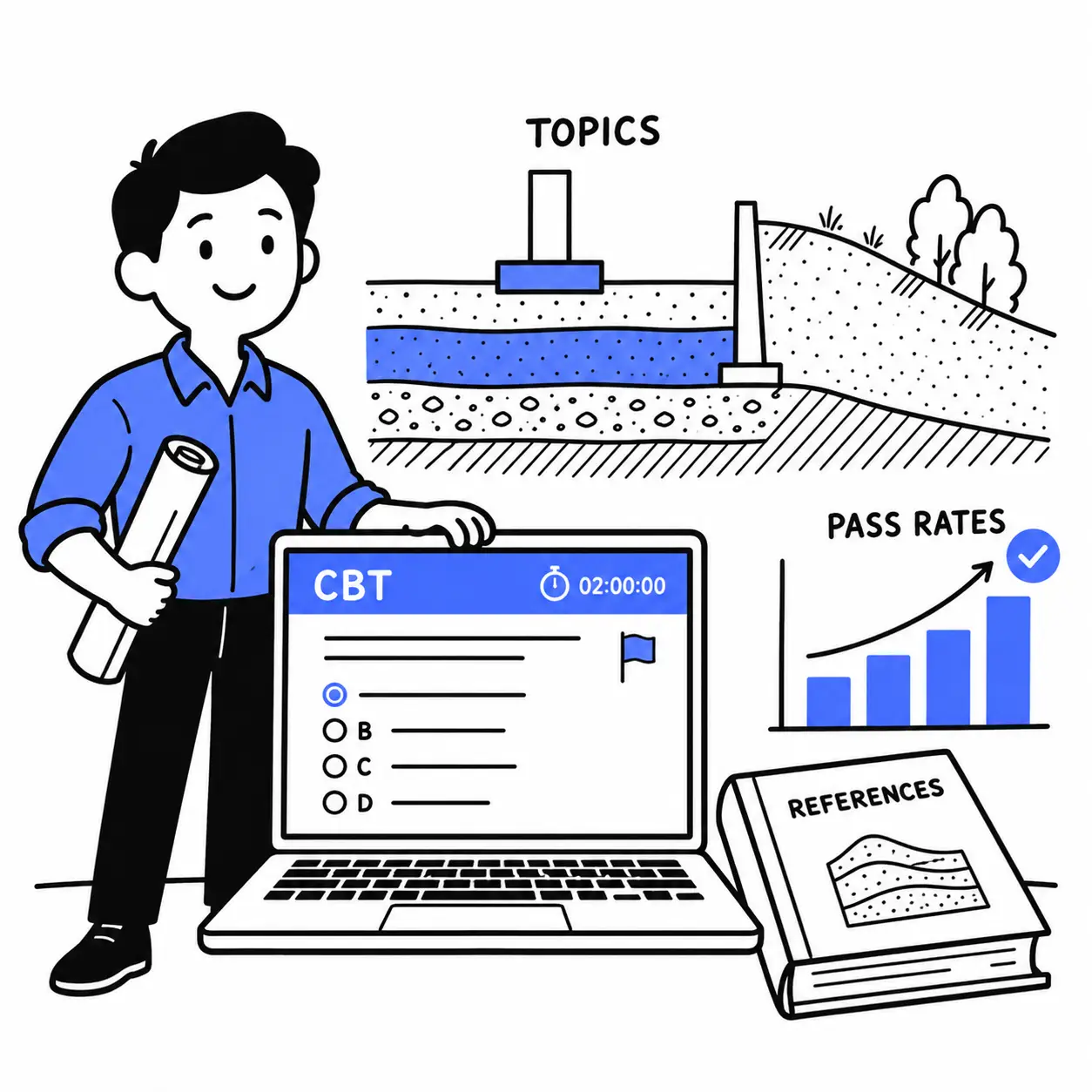
PE Civil Geotechnical Exam Guide Format, Topics, References & Pass Rates
Everything on the PE Geotechnical exam — the 10 NCEES knowledge areas with question counts, CBT format, bundled references, pass rates, and how to study.